

The History of Blacksmithing in Britain
The Forge at the Heart of the Village
In medieval Britain, the blacksmith was as essential as the miller or the parson. Every village of any size had its smith, often working from a lean-to beside the crossroads or the mill. His forge was a small, dark place, lit by the glow of the hearth and the sparks that flew from the anvil. The iron he worked was wrought iron, smelted in a bloomery from local ore and charcoal. It was tough, fibrous stuff, full of slag, and it had to be coaxed into shape with patient hammer blows rather than forced. The smith was not merely a maker of horseshoes. He was the repairer of ploughs, the forger of hinges, the fixer of cartwheels, and the man who could be relied upon to make a nail, a hook, or a chain at a moment’s notice. His skills were so vital that his workshop became a hub of local life, a place where news was exchanged and deals were struck whilst the bellows sighed and the hammer rang.
Tools and Techniques of the Traditional Smith
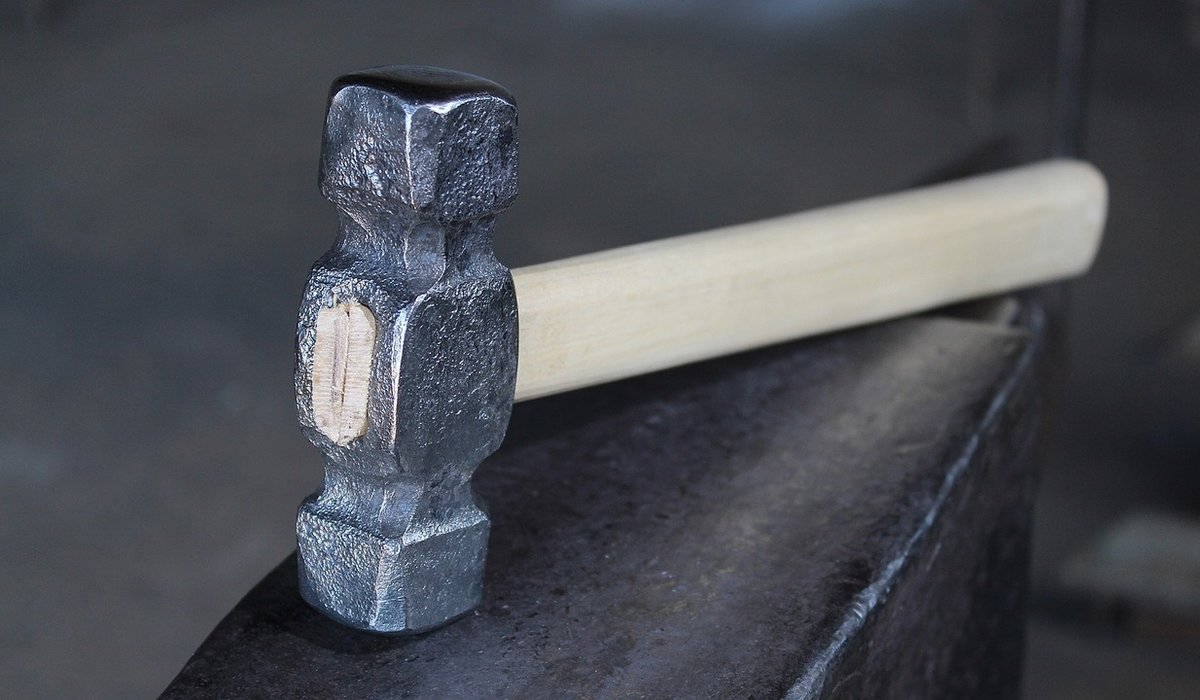
A traditional blacksmith’s kit was simple but highly specialised. The forge itself was a stone or brick hearth, fed with charcoal or, later, coal, and urged into life by a set of leather bellows. The anvil, made of wrought iron with a hardened steel face, was the smith’s chief tool. Its horn was used for bending curves, its hardy hole for holding bottom tools, and its pritchel hole for punching. Hammers came in many weights, from a light cross-peen for delicate work to a heavy sledge for drawing out iron. Tongs were made to fit the work, not the hand, and a smith might own dozens of pairs. Punches, chisels, fullers, and swages each had their place.
The smith judged temperature by colour. A cherry red heat was for bending; an orange or yellow heat for forging and fire welding; a white heat for the most demanding work. Fire welding, also called forge welding, joined two pieces of iron by hammering them together at a white heat with a sprinkle of sand or borax. Tempering and quenching gave tools their edge and toughness. A good smith could read the metal’s colour and feel its movement under the hammer, knowing exactly when to strike and when to wait. This was a craft learned over seven years of apprenticeship, and even then, the learning never truly ended.
- Forge: hearth, bellows, fire tools, and a supply of fuel.
- Anvil: the smith’s workbench, often weighing over 100 kg.
- Hammers: cross-peen, ball-peen, and sledge, each with a purpose.
- Tongs: flat, round, and hollow bits for gripping hot iron.
- Punches and chisels: for cutting, drifting, and shaping holes.
- Fullers and swages: for drawing out and smoothing curves.
What the Smith Made: From Hinges to Horseshoes
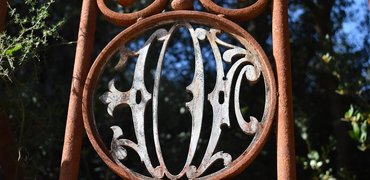
The range of work was astonishing. In an age before factories, almost everything made of iron came from a smithy. He made nails by the hundred, each one hand-forged from a rod. He made hinges, locks, latches, and door furniture. He made gates, railings, and church screens, often with decorative scrollwork that showed his artistry as well as his skill. He made tools for other trades: chisels for the carpenter, axes for the woodsman, sickles for the harvest, and plough irons for the farmer. He made cooking utensils, fire baskets, chains, and cart fittings. And he shod horses.
Farriery was a trade in itself, but most village smiths practised it. A good farrier would trim the hoof, shape the shoe to fit the horse’s gait, and nail it on with care. A poorly fitted shoe could lame a horse, and a lame horse could ruin a farmer. The smith’s reputation rested on such practical judgments. Decorative ironwork, from weather vanes to ornate gates, was a source of pride, but it was the everyday work that kept the forge burning.
The Industrial Age Transforms the Craft
From the late eighteenth century, the industrial revolution changed everything. Coke replaced charcoal in smelting, and blast furnaces produced iron in vast quantities. Rolling mills and steam hammers could shape metal faster and more cheaply than any hand. Mass production flooded the market with factory-made nails, tools, and machinery. Railways demanded immense amounts of ironwork, and blacksmiths found work in factories as strikers, fitters, and engineers. The village smith, however, began to decline. Cheap goods undercut his trade, and the motor car gradually replaced the horse. By the early twentieth century, many rural forges had fallen silent. Yet the skills did not vanish entirely. Some smiths adapted to welding, general engineering, and repair work, keeping the craft alive in new forms.
The Ember Endures: Blacksmithing Today
In recent decades, traditional blacksmithing has seen a quiet revival. Heritage centres, artisan workshops, and independent smiths have rediscovered the value of hand-forged metal. Modern blacksmiths may use gas forges and power hammers, but they still rely on the same principles: reading the heat, moving the metal, and finishing with care. Architectural ironwork, bespoke tools, and restoration projects keep the craft relevant. If you ever get the chance to stand near a working forge, listen for the anvil’s ring and watch the sparks rise. The village smith may be gone from every crossroads, but the ember still burns.


Forging Basics
-
Turn an old rail spike or bar into a practical poker. Learn to draw out the shaft and form a comfortable handle.
Projects


-

Long established fact that a reader will be distracted
-

Long established fact that a reader will be distracted
-

Long established fact that a reader will be distracted

Tooling
Karla Gleichauf
12 May 2017 at 05:28 pm
On the other hand, we denounce with righteous indignation and dislike men who are so beguiled and demoralized by the charms of pleasure of the moment
M Shyamalan
12 May 2017 at 05:28 pm
On the other hand, we denounce with righteous indignation and dislike men who are so beguiled and demoralized by the charms of pleasure of the moment
Liz Montano
12 May 2017 at 05:28 pm
On the other hand, we denounce with righteous indignation and dislike men who are so beguiled and demoralized by the charms of pleasure of the moment