

Essential Safety Equipment for the Home Smithy
Before You Strike the First Blow
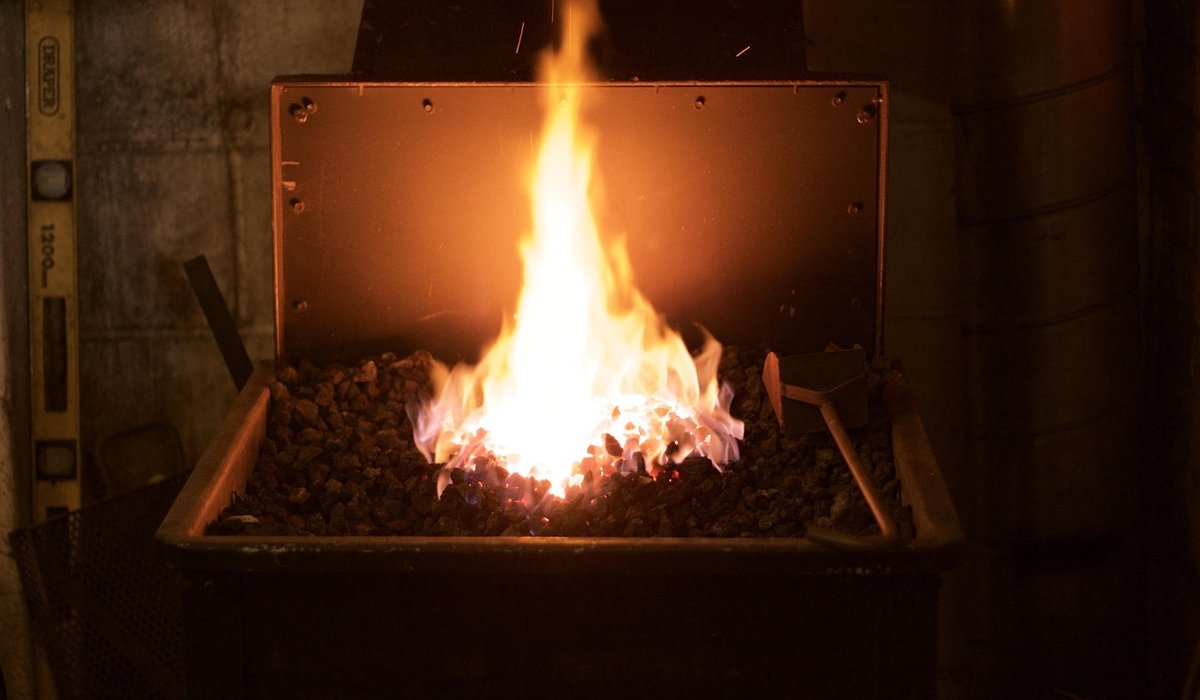
There is something quietly wonderful about a home forge. The smell of coal, the glow of steel, the ring of hammer on anvil. But a smithy is a workshop like no other, and the hazards in it behave differently from anything else in the shed. Steel at bright yellow heat spits scale that welds itself to skin. Grinders throw sparks at eye level. Coal smoke and flux fumes fill the air with things your lungs would rather not meet.
The good news is that the kit which keeps you safe is neither complicated nor expensive. What matters is that you buy it before you light the forge, rather than after your first trip to A&E. Here is the minimum, and the reason each piece earns its place.
Eye Protection: The One Thing You Never Skip
Injuries to the eye are the most common smithing mishap, and almost all of them are preventable. Hot scale flies in unpredictable directions, grinding dust drifts, and a stray spark from a wire brush will find the gap in your defences.
- Close-fitting safety glasses rated to EN 166, worn at all times in the workshop, even for a "quick job". Prescription glasses do not count unless they are specifically rated as eye protection.
- A full face shield for anything involving an angle grinder, bench grinder, or cutting disc. Wear it over your safety glasses, never instead of them.
- A spare pair kept near the door. Scratched lenses cause people to stop wearing them, and that is when accidents happen.
Get into the habit early. Glasses on when you walk in, off when you leave.
Hearing Protection: Guarding Against the Ring of the Anvil
An anvil struck by a hammer can easily exceed 100 decibels, and a power hammer or angle grinder is louder still. Hearing loss from this kind of work creeps up quietly over years, and it does not come back.
- Ear defenders with a rating of around SNR 25 to 30 decibels are ideal for forging. Muffs are quicker to put on and off than plugs, which means you will actually use them.
- Disposable earplugs are a sensible second layer under muffs when you are grinding or using a power hammer for a long session.
- Consider a lighter approach to the anvil. A quieter anvil is a pleasanter one. Sitting the anvil on a bed of silicone or securing the stump properly reduces the ringing considerably.
Your Lungs: The Invisible Hazards
This is the area most home smiths underestimate, because the damage is slow and entirely invisible. Smoke from a coal forge carries fine particulates. Flux fumes are corrosive. Galvanised steel gives off zinc oxide fume which causes metal fume fever, a genuinely unpleasant flu-like illness that will put you in bed for a day. The most commonly implicated material in ceramic fibre blanket, widely used to line gas forges, is a serious respiratory irritant and should be treated with real respect.
- A P3 particulate respirator for handling ceramic fibre, mixing refractory, and any grinding or wire-brushing of scale.
- Genuine ventilation. Forge outdoors, or in a building with the doors open and a cross-draught. Never work with the forge running in a closed garage.
- A carbon monoxide alarm if you run a gas forge under cover. This is non-negotiable.
- No galvanised, painted, or plated steel in the fire unless you know exactly what you are doing.
Skin, Hands, and Feet
Burns are the other great tradition of the craft, and most of them come from clothing choices rather than the fire itself. Synthetic fabrics melt and fuse to skin, which turns a minor burn into a serious one.
- A leather apron, full length, worn over cotton or wool clothing. Natural fibres only, please.
- Leather gauntlets for handling stock, tongs work, and anything near the fire. Take them off for fine hammer work where grip and feel matter more.
- Leather boots with no exposed laces, and trousers worn over the boot tops so scale cannot drop inside.
- Tie back long hair, roll up loose sleeves, and remove rings and watches. Hot metal and jewellery do not mix.
Keep a small burns kit and a bucket of clean water within arm's reach of the forge. Treat any burn immediately, and never use a quench bucket for first aid; it will be full of oil, scale, and god knows what else.
Good Habits Beat Good Gear
Equipment only works if it is used, and a few simple routines will do more for your safety than any single purchase. Keep the floor clear and dry. Mark hot metal with a dab of paint or a chalk line so nobody picks up a piece that is still cooling. Keep a dry powder extinguisher and a bucket of sand by the door. Never quench mystery steel in a bucket you might later reach into. And stop when you are tired. Almost every smith I know who has been properly hurt was working late, on their own, on "just one more heat".
Buy the gear, wear it every time, and the forge becomes what it should be: a place of quiet satisfaction rather than a cautionary tale.


Forging Basics
-
Tongs hold hot metal securely. Learn about jaw shapes, reigns, and which styles suit flat stock, round bars, and bolt heads.


Projects


-

Long established fact that a reader will be distracted
-

Long established fact that a reader will be distracted
-

Long established fact that a reader will be distracted


Tooling
Karla Gleichauf
12 May 2017 at 05:28 pm
On the other hand, we denounce with righteous indignation and dislike men who are so beguiled and demoralized by the charms of pleasure of the moment
M Shyamalan
12 May 2017 at 05:28 pm
On the other hand, we denounce with righteous indignation and dislike men who are so beguiled and demoralized by the charms of pleasure of the moment
Liz Montano
12 May 2017 at 05:28 pm
On the other hand, we denounce with righteous indignation and dislike men who are so beguiled and demoralized by the charms of pleasure of the moment